All Blogs
Cover Letter vs Resume: Key Differences and When to Use Each
Learn the essential differences between cover letters and resumes, their unique purposes, and how to optimize both for your job search success.
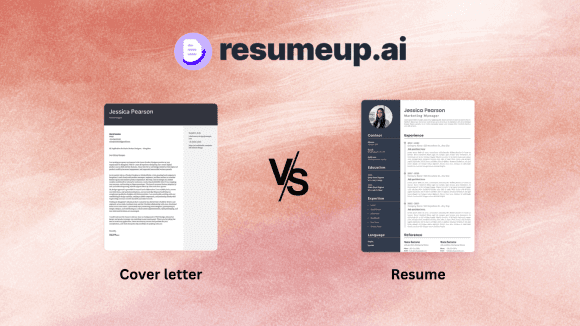
Candidates who submit a tailored cover letter are 1.9 times more likely to land an interview, with one study finding a 53% higher callback rate compared to applications without one. So, a cover letter and resume work as a pair, and knowing their difference matters to create stronger, more targeted job applications.
Your cover letter tells why you're fit for the job, while a resume has to survive the software first. Since 99% of Fortune 500 companies screen with ATS and 88% of employers say poor formatting buries qualified candidates, formatting your resume well is what earns your cover letter a reader.
Quick Glance at Cover Letter vs Resume
Comparison Criteria | Resume | Cover Letter |
|---|---|---|
Purpose | To inform | To prove the candidate's competence |
Tone | Formal | Professional but upbeat |
Length | 1-2 pages (at max) | 4-5 paragraphs |
Format | Structured and concise. Divided into specific sections. | Narrative and in paragraph format. Candidates can add personality traits like confidence, leadership, etc. |
Perspective | Includes objective information. | Contains subjective details. |
Is it required? | Resumes are the primary document for applying. Always required. | Serves as the additional document. Candidates can attach if hirers demand, or are optional. |
What's the Core Difference Between a Cover Letter and Resume?
The core difference between a cover letter and a resume lies in their basic goals. The goal of your resume is to inform employers about your qualifications and experiences. On the other hand, in your cover letter, you share a detailed description of your skills and explain why you are a better fit than the rest.
Your resume presents factual information about you in a concise and structured way. Resumes must have different sections with professional headings. For example, sections are separately assigned for education, skills, experience, or references.
But you attach a cover letter to introduce yourself better as a candidate to the employer. With your cover letter, you get a chance to explain points like -
Why are you applying for the post?
What sets you apart from the rest?
How can you contribute to the department? Etc.
Remember that you can't repeat the contents of your resume. The aim of writing a cover letter is to supplement your resume and not replace it!
The formatting of your resume and cover letters matters these days like never before. Only optimized AI-built templates can save your resume from getting filtered by ATS.
How Does a Cover Letter Differ from a Resume in Writing Style?
Given the cover letter vs resume purpose, your resume gives an overview of your professional self, and the cover letter sells your qualifications. The writing style for a resume is different from that of a cover letter. If you are a casual job seeker, then get help with free templates and AI-based higher application scores with resumeup.ai. free platform. Here's a comparison of the writing style of the two:
Tone
The tone of your resume should be extremely formal and concise in comparison to a cover letter. That is, your resume only aims to list your background, skills, and qualifications in an organized way.
When it comes to your cover letter, you can directly address your future recruiter. So, organically, you can insert more of your personality into your letter. But you should know where to draw the line and not overexpress yourself. Try to highlight your professional profile better than your personal side.
Format
For your resume and cover letter, the formatting aspect is vital and can optimize your resume for ATS. Choosing the best resume fonts is part of that process. The format for both the cover letter and the resume is different. Here's how:
Resume
The resume format is narrower with more factual information regarding background, skills, and experiences. The entire document can be 1-2 pages at best, divided into particular sections with professional headings. The information in every section should be in short sentences or a few words.
Cover Letter
When you write a cover letter, it's mainly in paragraph format. You start with greetings and salutations. Following that, there are three further subdivided paragraphs: introduction, body, and conclusion. You end your letter within 4-5 paragraphs and lastly with a signature.
What Sections Go in a Resume vs Cover Letter?
For your resume and cover letter, you can't miss out on the following sections-
List for your Cover Letter
A cover letter heading
Cover letter address
Salutation
Strong closing statement
A professional but compelling introduction
How you can contribute if hired
Concrete reasons for choosing this company to apply to.
Relevant achievements that align with the job requirements.
Remember not to stretch the letter unnecessarily and write in a compelling tone. Before sending, don't forget to proofread. You can also use the powerful editors.
List for your Resume
A brief about you
References
Career Objective
Work experience
Educational Qualification
Professional and additional skills
Contact information (phone number/email address)
Extra certificates, language proficiency, publications, etc.
Your resume must follow the rules of the chosen resume format. If you need content suggestions for any of these sections or are looking for an ATS-friendly template, then visit our resume builder platform. Start designing your resume and cover letter in 5-6 minutes with our AI support tools.
When Should You Send Both - and When Is a Resume Enough?
In most cases, send both a cover letter and a resume. Even when a job posting says a cover letter is "optional", 77% give preference to applicants who include it.
A cover letter only earns its place when your resume can't explain the whole part. If you're changing careers, explaining about education or employment gaps, a cover letter is the best place to add context - 57% of recruiters say they'd rather see gaps explained in a cover letter than on the resume or in the interview.
A resume alone is sufficient when
An employer specifically mentions no cover letter
The application doesn't have a field to upload a cover letter
For high-volume quick-apply roles where it won't be read.
In other cases, including a cover letter can strengthen your application and improve your chances of standing out.
Cover Letter and Resume Examples
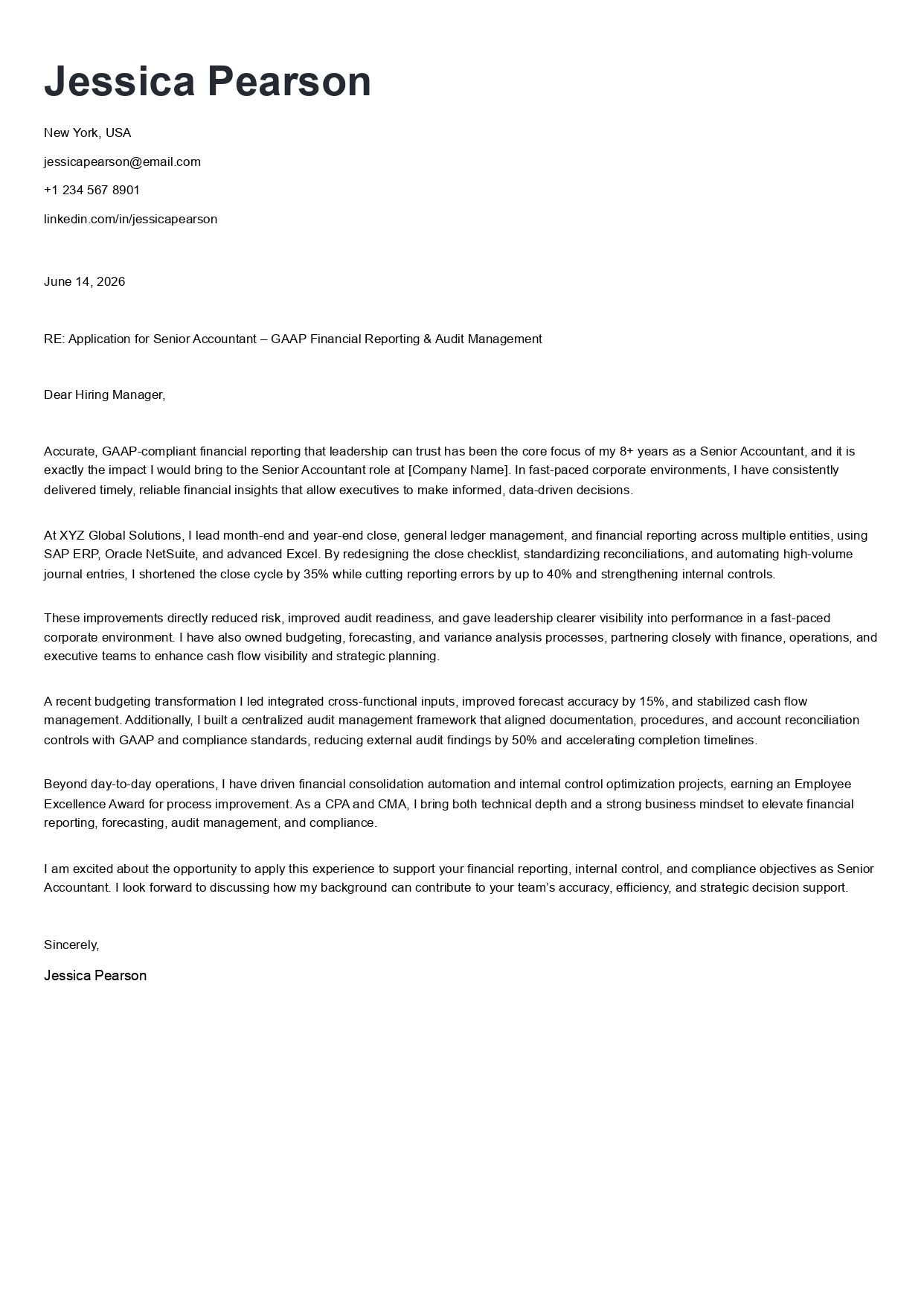
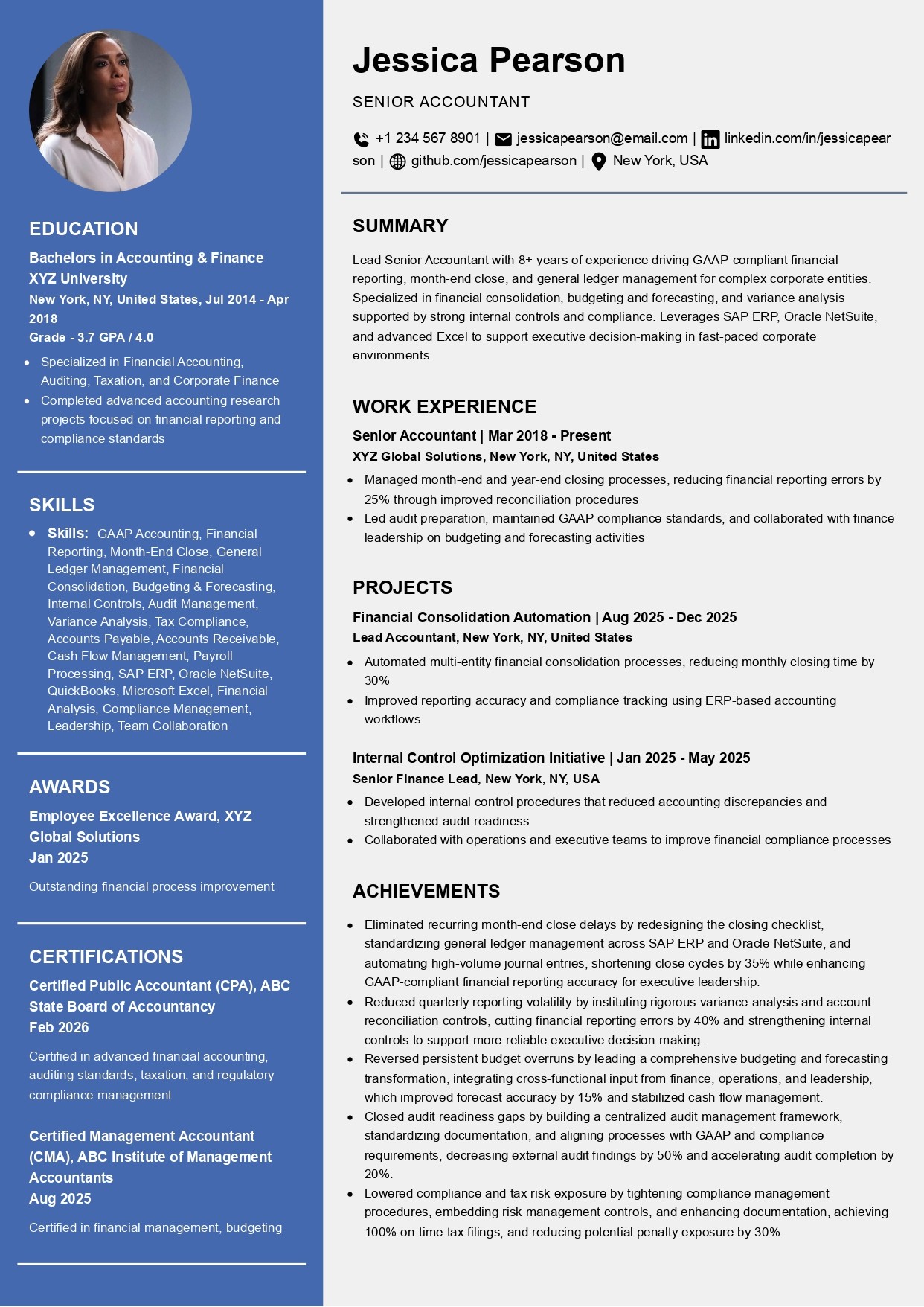
Here are the visual representations of the cover letter and resume examples to help you understand better.
Cover Letter Example for a Senior Accountant
Resume Example for a Senior Accountant
Importance of AI-Built Cover Letters and Resumes for Application
Both the resume and cover letter together can shortlist you for the interview. But as per professional standards, a resume is the basic and mandatory document that you need to apply for any company. An AI resume builder can help you craft a professional resume quickly. The cover letter is an additional document that the hiring company may or may not ask for.
However, as said earlier, the difference between a cover letter and a resume is in their length. Your resume is short and can hardly be 1-2 pages long. When you apply with a cover letter, that gives you a better chance to explain yourself. All the additional details are presented in 4-5 long paragraphs.
Both your resume and cover letter should avoid common errors, including spelling, punctuation, informal tone, etc. You can proofread your content with our detailed AI-based analysis and secure an ATS-optimized score. ATS-friendly applications add three times better interview chances for freshers and experienced candidates alike.
Frequently Asked Questions
What is the ideal length for a cover letter vs a resume?
A resume should be 1-2 pages with concise sections, while a cover letter should be kept to 1 page with 4-5 paragraphs in a narrative format.
Can I repeat my resume content in my cover letter?
No — your cover letter should complement your resume by explaining your motivations and fit for the role, not simply repeat the same information already listed.
How do I make sure both my resume and cover letter pass ATS?
Using ATS-friendly templates, including job-specific keywords, and avoiding complex formatting like tables and graphics are the key steps — tools like ResumeUp.AI can check and optimize both documents automatically.
What's the difference between a cover letter and a resume?
A resume is a brief, factual snapshot of your skills and achievements; a cover letter is a short note that argues why you're the best fit to the job role you're applying for. The resume shows what you've done and cover letter explains why it matter for the job.
Is a cover letter still worth it in 2026?
Yes, a tailored cover letter improves your callback rate, and most employers read them even when they're optional.
Is a cover letter better than a resume?
No, cover letter isn't better than a resume. Your resume do the heavy lifting, resume has to past the ATS screening test and then recruiter shortlisting. The cover letter supports it by explaining your fit, but it can't replace the resume; the two work best as a pair.

Rohith Reddy
Co-Founder
Rohith Reddy is the co-founder of ResumeUp.AI and a former hiring manager who conducted 500+ technical interviews over a decade at companies including ADP. His hiring-market research at ResumeUp — including studies on ghost jobs and AI's impact on entry-level hiring — has been covered by Entrepreneur. A Computer Science graduate, he writes about what recruiters and ATS systems actually reward, from both sides of the hiring table.