All Blogs
LazyApply Review 2026: I Tested It on My Own Job Search
Can auto-applying really land you a job? I put LazyApply's tools to the test in July 2026 and found where speed helps and where it falls apart.

Applying to jobs is exhausting, and LazyApply promises to take it off completely. Set up the Chrome extension once, and it applies to hundreds of jobs on LinkedIn, Indeed, and ZipRecruiter for you. But sending lots of applications and actually hearing back are different, and I wanted to see what LazyApply really does.
So I tested LazyApply myself in July 2026 – the setup, the real cost, and what you get once it starts applying for you. Here’s the honest breakdown: who it’s worth it for, who should skip it, and what I’d use instead.
How I reviewed LazyApply: I tested its free tools hands-on in July 2026 — resume builder, ATS score, cover letters, and profile setup. Auto-apply is locked behind the paid extension, so I backed that up with real paid-user reviews from Trustpilot, the Chrome Web Store, and Reddit.
Transparency: ResumeUp.AI is our own product. I’ve aimed for a fair, honest comparison — including where LazyApply does things well.
TL;DR
LazyApply is a Chrome extension that auto-applies to jobs for you, built purely for volume, up to 150 applications a day, starting at $99/year.
Where it falls short: it doesn’t tailor your resume to each job, its ATS score mostly just tells you to stuff in more keywords, cover letters ignore your work background, and poor support and refund trouble are common complaints.
It’s a fit if you want a hands-off tool that blasts out applications and don’t mind that none of them are tailored.
ResumeUp.AI is the best alternative and strongest pick with full control, tailoring, and a complete toolkit at $29/mo, or $8.25/mo annually.
LazyApply at a Glance
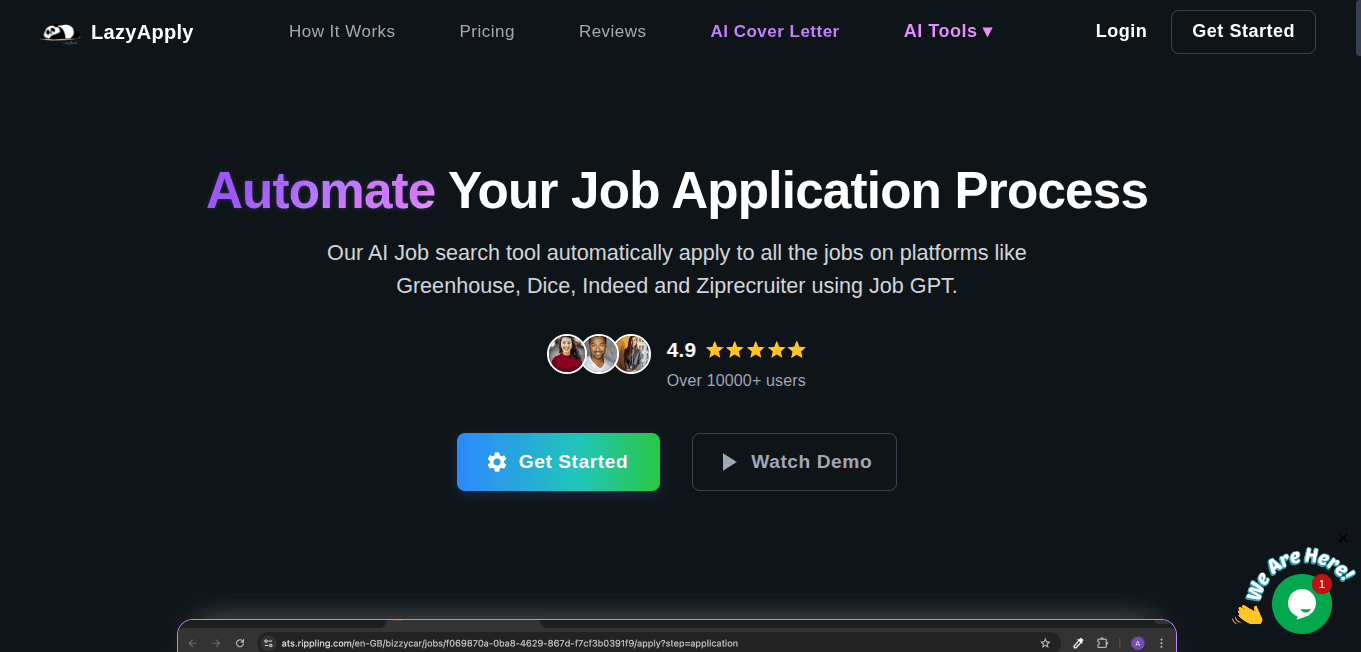
LazyApply has been around since the early days of auto-apply, and its whole focus is volume. You set up a profile once with your work history, skills, and resume, connect your Google account, and the extension applies to jobs for you.
It’s built for one thing: getting your resume out to as many jobs as possible, fast. On the Premium plan, that’s up to 150 a day. But it doesn’t tailor anything – the same goes for every job, whether it fits or not. You get speed, not a good match.
What LazyApply Actually Does for You
Applies to jobs in one click across LinkedIn, Indeed, ZipRecruiter, and Greenhouse
Find jobs by keyword – you type in search terms, and it pulls matching listings.
Writes cover letters from templates
Lets you save multiple resume profiles, from 1 Basic up to 5 or more on higher plans.
Includes a referral-email generator and a basic resume builder
What Makes It Stand Out
Speed. It sends more applications in an hour than you’d manage manually in a week.
Cheap to start. Basic is $99 a year, about $8.25 a month.
Quick setup. It’s a Chrome extension – install it, log in, and you’re going in about 5 minutes.
Works well on LinkedIn Easy Apply when it’s running smoothly.
Where It Falls Short
No resume import. You can’t upload a resume you already have – you type everything from scratch, one section at a time, into just two available templates. It’s a slow start.
The ATS score isn’t job-specific. You get a generic score that never changes from one job to the next, and its main “fix” is to add a long list of keywords – the kind of keyword stuffing that reads as spam to recruiters rather than real optimization.
Cover letters don’t match your resume. They’re written from just your name, company, and recipient’s title, so nothing about your background makes it in. What you get is a template filler.
The profile parser is unreliable. It often leaves your profile incomplete and makes you fill in details no resume includes, like gender and citizenship, by hand anyway.
No tailoring. The same resume goes to every job regardless of fit. That’s the core trade-off: you’re optimizing for volume, not for getting a role you actually match.
Refunds can be hard to get. There’s a 30-day refund policy on paper, but reviewers frequently report having to chase a refund that takes forever or never arrives.
What LazyApply Costs
LazyApply sells four plans. There are three fixed annual tiers, and the fourth one is custom. Every plan is billed once a year, up front, and you have to sign up with a Gmail account.
Plan | Price (Annual) | Applications/ day | Resume profiles | Support |
Basic | $99 | 15 | 1 | |
Premium | $149 | 150 | 5 | |
Ultimate | $999 | 1,500 | 20 | Priority |
Enterprise | Custom | Unlimited | Unlimited | Priority + training |
LazyApply promises a 30-day money-back guarantee, but many reviewers say the refund never actually came through.
What I Found When I Tested LazyApply
The homepage promises a lot, so I went in and used the tools myself – I built a resume, scored one, and wrote a cover letter. The one part I couldn’t test is the auto-apply, since that runs through the paid Chrome extension. For that, I’ll show what people who actually paid for it report. Here’s what I found.
Resume Builder
LazyApply does have a resume builder, but there’s no import. You can’t upload a resume you already have and edit it. You type everything in from scratch: your details, skills, education, and work history, one section at a time.
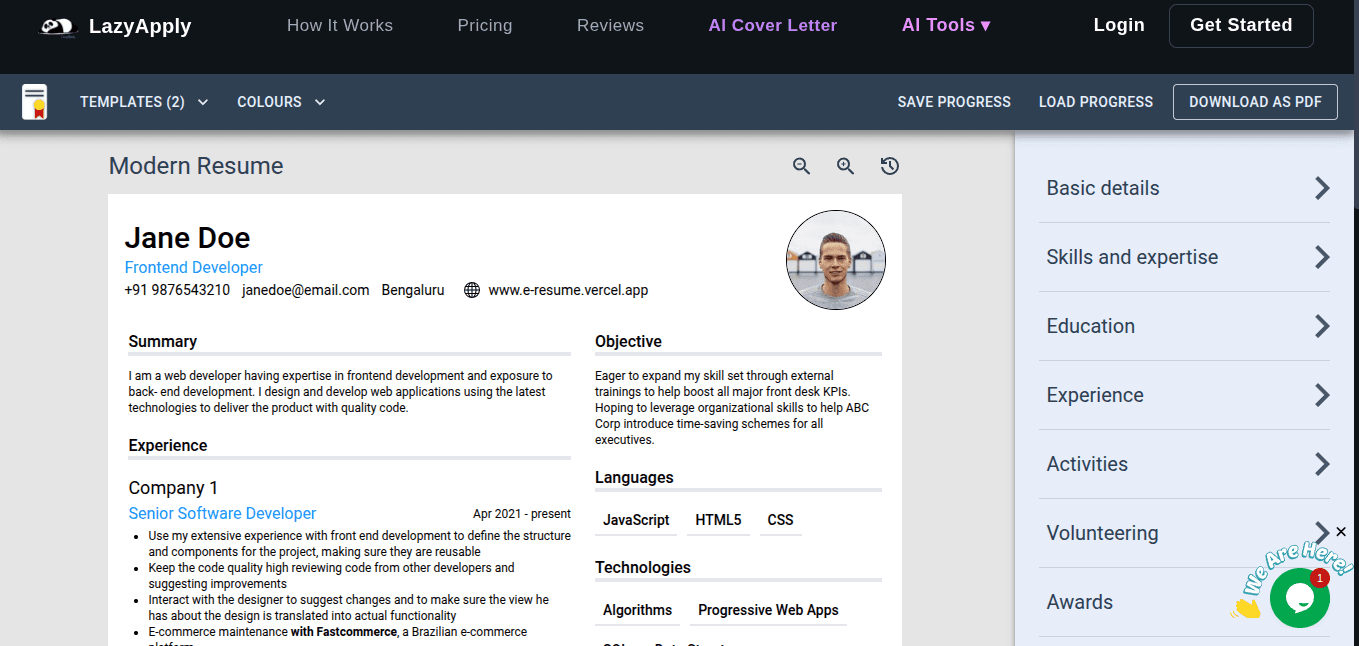
And I only get 2 templates to pick from. Most people applying for jobs already have a resume, so being forced to rebuild it manually, with just two layouts, is a slow start for a tool that is supposed to be all about speed.
Resume Score
I uploaded my senior accountant resume to see the score. LazyApply gave it a 68 out of 100 and handed me a long list of keywords to “add”.
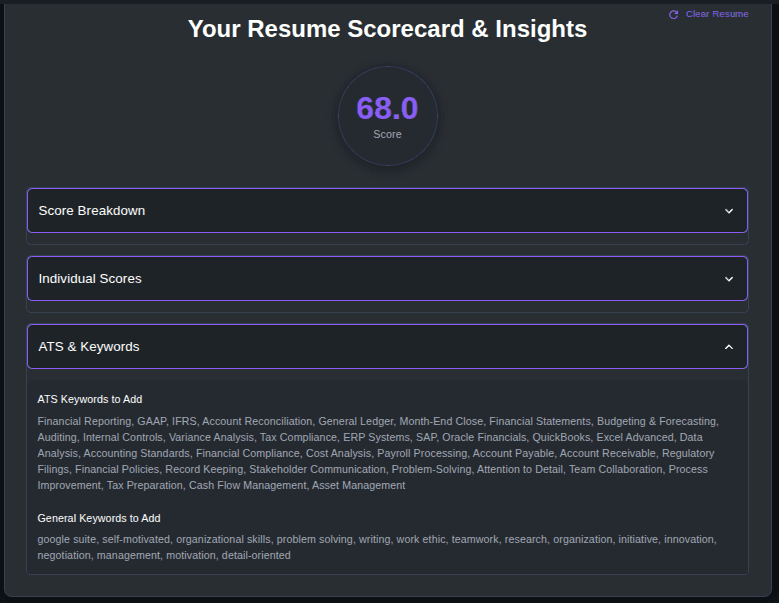
First problem: the score isn’t checked against any job description. There’s nowhere to paste an actual posting, so the 68 is just a generic number – it stays the same number no matter which job you’re applying for.
Second, the scoring itself is shaky. Half the keywords it told me to add – GAAP, Month-End Close, Internal Controls – are already in my resume, word for word. And the report contradicts itself: Keyword Balance goes negative for “overcrowding,” then tells me to add 30+ more keywords.
Cover Letter
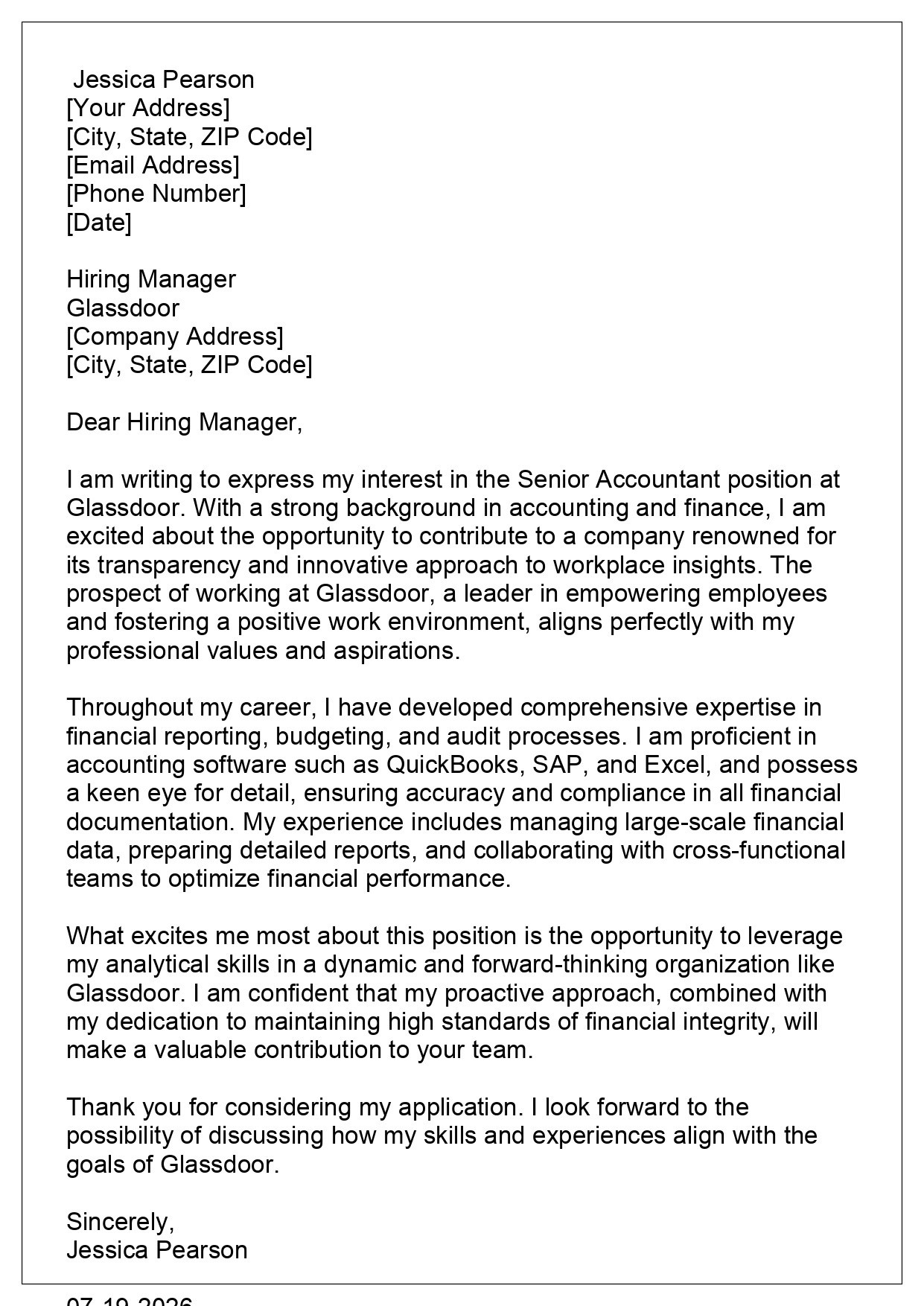
The cover letter tool doesn’t look at your resume. It asks directly for three things – your name, the company, and the recipient’s title – and writes the entire letter from that.
So the letter has zero connection to my actual background. My resume has 8+ years, a CPA, and wins like cutting close cycles by 35% – none of it made the letter. What I got is pure template filler: “keen eye for detail,” “proactive approach,” “dynamic and forward-thinking organization.”
Auto-Apply Profile Setup
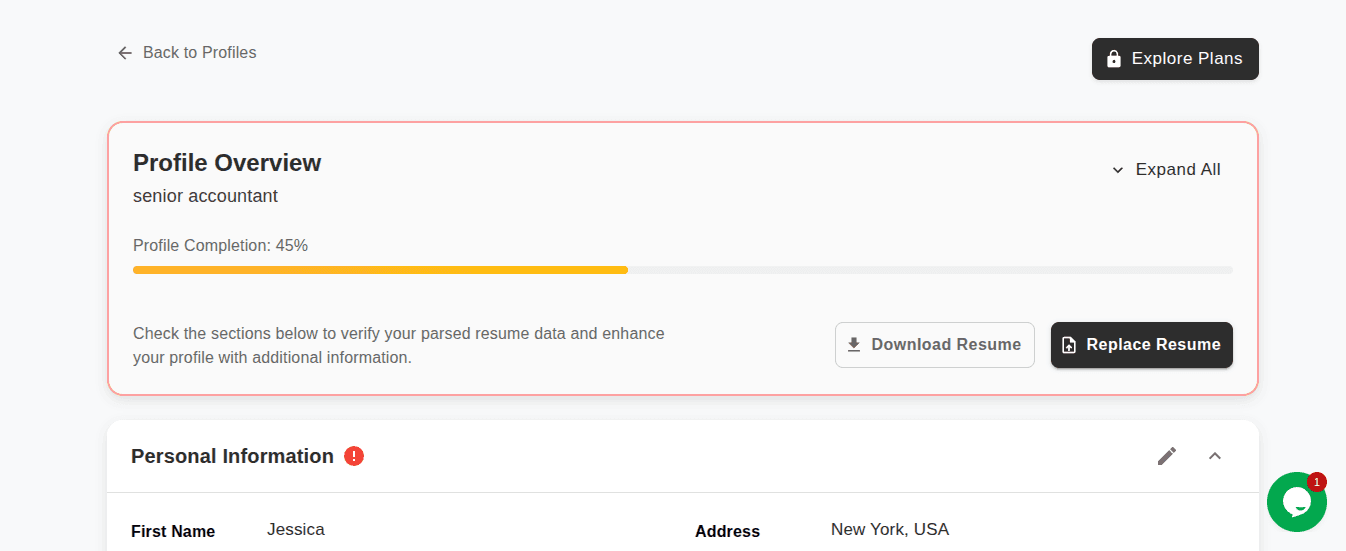
I built a profile to see the setup for myself. I uploaded my resume, LazyApply parses it, and that profile is what the extension pulls from when it answers application questions. Even with my full resume uploaded, the parser only reached 45% completion and flagged errors in my personal information.
The “missing” info? Fields like Gender, Zip Code, and Citizenship – things no resume even includes, so you end up typing them in by hand anyway. And you’d better fix it all before turning auto-apply on, because whatever sits in this profile is exactly what goes out on every application, at up to 150 a day.
My Key Takeaway
LazyApply is genuinely fast and cheap to get going, but that’s where the value stops. It scales quantity, not quality; whatever you rush through in setup gets fired out to every job, and nothing about each application actually gets stronger. If volume is all you want, it delivers. If you want applications that get read, this isn’t the tool.
LazyApply Ratings & User Reviews
On Trustpilot, LazyApply holds a low 2.1 out of 5, with complaints dominating – the recurring themes are nonexistent customer support, refunds that stall, and auto-apply mistakes on live applications.
On the Chrome Web Store, the extension rates 3.3 out of 5 – a more mixed picture: some users like the one-click volume, while others hit bugs, blanked-out fields, and profile answers the tool ignores.
On Reddit, opinion is split – some users credit the volume for landing a few interviews, while others say it fires off generic applications that go nowhere and report the same refund and support troubles.
What Users Say
The reviews come back to the same three problems – support, refunds, and applications going out wrong.
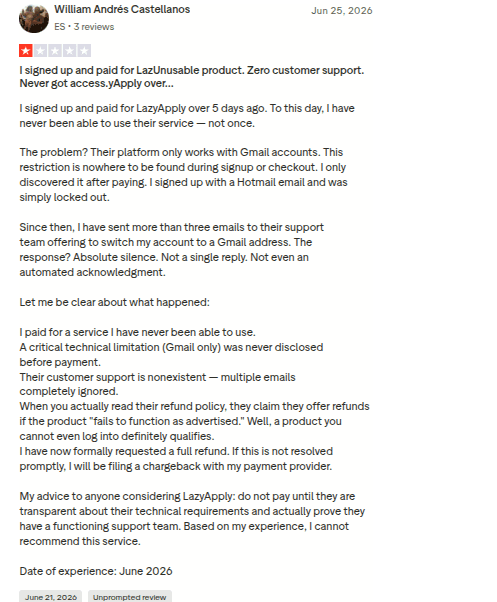
One user paid but couldn’t use the tool for five days because it only works with Gmail – something they weren’t told before paying, and support never replied to their emails.
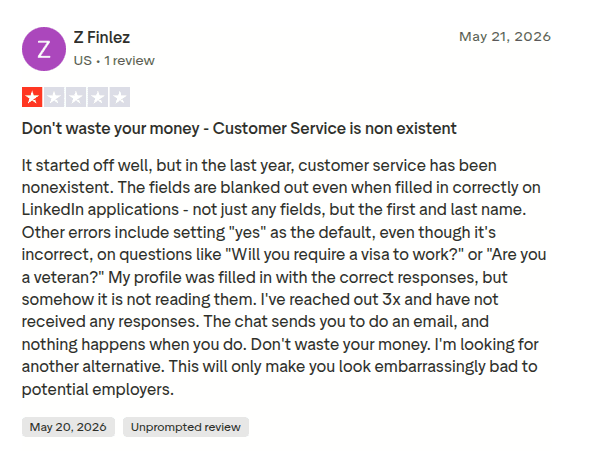
Another says the tool blanks out fields on LinkedIn even when filled in correctly, including first and last name, and gets questions like visa or veteran status wrong even though the profile is correct. Support didn’t respond after three tries.
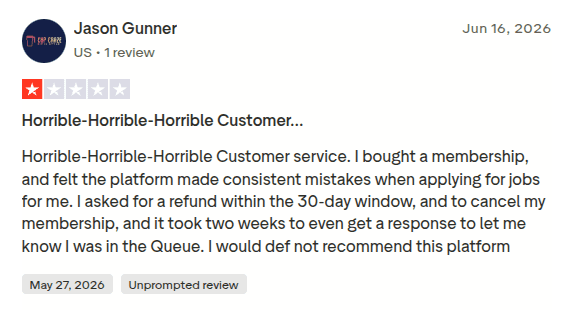
A third asked for a refund within the 30-day window after the tool kept making mistakes on applications, then waited two weeks just to be told the request was in a queue.
What’s a Better Alternative to LazyApply?
The best alternative to LazyApply is ResumeUp.AI. It fixes exactly what LazyApply gets wrong: instead of using the same untailored resume everywhere, you stay in control and tailor each job application to the job.
You still apply fast. Its Chrome extension autofills applications in one click on LinkedIn, Workday, Greenhouse, Lever, and more, but you review and approve every submission rather than letting a tool fire off 150 a day on autopilot.
And it covers the whole search in one place, not just applying:
AI resume builder with import and 20+ templates
ATS checker that scores against the exact job
LazyApply vs ResumeUp.AI: Feature Comparison
Feature | LazyApply | ResumeUp.AI |
Best for | Blasting out applications at volume | Applying to lots of roles and tailoring each one |
How it works | AI auto-applies on your behalf | You pick jobs, one-click autofill applies |
Applying | Auto-submits, no review | Autofills – you review and submit |
Resume import | ❌ Build from scratch | ✅ Upload and edit |
Templates | 2 | 20+ with full customization |
ATS scoring | Generic number | Score against the exact job you target |
Job tailoring | Same resume to every job | Re-tailored per role |
LinkedIn optimizer | ❌ | ✅ |
Mock interviews | ❌ | ✅ |
Chrome extension | ✅ Auto-Apply | ✅ One-click autofill you approve |
Price | $99-$999/yr | $29/mo, or $8.25/mo annual |
Finding & Applying to Jobs: You in Control vs Fully Automated
Auto-apply tools are everywhere now, and so is the problem they create: according to Greenhouse’s 2025 Workforce & Hiring Report, recruiters today handle nearly three times as many applications per role as they did in 2021, with AI-driven mass-applying burying qualified candidates.
ResumeUp.AI wins for speed with control; LazyApply for raw automation. LazyApply fires up to 150 applications a day of the same untailored resume, deciding and submitting for you with no real review. ResumeUp.AI shows you matches, lets you pick, and autofills in one click – just as fast, but you approve every submission before it goes out.
ATS Score & Optimization: Generic vs Job-Specific Scoring
ResumeUp.AI wins. It scores your resume against the exact job you paste in, flags the keywords you’re actually missing, fixes them in one click, and lets you rescore; plus it checks grammar and readability.
LazyApply gives you one generic score that never changes from job to job, and its main advice is to stuff a long list of keywords that reads as spam to recruiters rather than real optimization.
Tools: All-in-one Toolkit vs Apply-Only
Resumeup.AI wins as the complete job-search kit. Alongside the resume builder, it includes an ATS checker that scores against a specific job, a keyword finder, a cover letter generator, a LinkedIn optimizer, mock interviews, and a job tracker – the whole search in one place.
LazyApply covers keyword search, auto-applying, a basic builder, and template cover letters, and stops there. For real ATS scoring, LinkedIn optimization, or interview practice, you’re back to using other tools on top of it.
Pricing
LazyApply Basic and ResumeUp.AI both start at about $8.25/moth, so it comes down to what you get. LazyApply caps you at 15 applications a day and climbs to $149, then $999, for more volume. ResumeUp.AI stays flat and includes the whole toolkit – tailoring, ATS scoring, LinkedIn, interviews, and tracking.
Which Should You Choose?
Choose LazyApply If
You want a fully hands-off tool that fires out applications for you
You care more about raw volume than whether each application fits
You’re fine sending the same untailored resume to every role
You want the cheapest way to blast LinkedIn Easy Apply and don’t need tailoring or scoring
Choose ResumeUp.AI If
You want to apply fast but stay in control of every submission
You want to tailor each resume and score it against the job’s ATS
You need a full toolkit: builder, cover letters, LinkedIn optimizer, mock interviews, and a tracker
You want to import your resume and pick from 20+ templates
You want unlimited use of every tool at one flat price
LazyApply wins if you want maximum volume with zero effort and don’t care much about fit. But with recruiters already drowning in mass-applied resumes, volume alone is what buries you. For everyone applying seriously – fast, tailored, and in control – ResumeUp.AI is the stronger choice.
Comparing Jobright as well? See our list of the best Jobright alternatives, tested with pricing.
Considering a done-for-you service instead? Read our Scale.jobs review, where humans apply for you from $199 to $1,099 up front.
Using Simplify’s autofill? See the five best Simplify alternatives, tested with pricing and auto-apply.
Frequently Asked Questions
Is LazyApply worth it?
LazyApply is worth it only if you want speed and volume. It’s cheap to start and sends a lot of applications quickly. But it doesn’t tailor your resume to each job, its ATS score isn’t linked to any posting, and its cover letters ignore your background. So most applications go out generic, which is why it falls short for anyone who wants quality over quantity.
How much does LazyApply cost?
LazyApply has 4 annual plans, all paid up front with a Gmail account.
Basic is $99 a year for 15 applications a day
Premium is $149 a year for 150 applications a day
Ultimate is $999 for 1,500 a day
Enterprise is custom-priced
There’s a 30-day money-back guarantee on paper, but many reviewers say the refund is slow to arrive or never comes through.
Does LazyApply tailor resumes to each job?
No, LazyApply sends the same resume to every job you apply for, no matter how well it fits. Its ATS score also isn’t checked against any specific posting, so the number stays the same wherever you apply. If you want your resume tailored and scored for each job, you’d need a tool like ResumeUp.AI, which matches your resume to the exact role before you apply.
What’s the best LazyApply alternative?
ResumeUp.AI is the best alternative for most job seekers. Instead of blasting out the same resume, it lets you tailor and control every application. You get resume import with 20+ templates, an ATS parser, a LinkedIn optimizer, cover letters, mock interviews, and a job tracker – the whole search in one place. It's $8.25/mo on the annual plan, the same starting price as LazyApply.
Is LazyApply safe and legit?
Yes, LazyApply is a real, long-running tool, and the extension does what it promises. The common complaints aren’t about it being a scam – they’re about value and delivery. Some users say it sends fewer applications than the plan promises, with little visibility into what actually went out, and others report trouble getting a refund under the 30-day guarantee. So it’s legit, but manage expectations.

Rohith Reddy
Co-Founder
Rohith Reddy is the co-founder of ResumeUp.AI and a former hiring manager who conducted 500+ technical interviews over a decade at companies including ADP. His hiring-market research at ResumeUp — including studies on ghost jobs and AI's impact on entry-level hiring — has been covered by Entrepreneur. A Computer Science graduate, he writes about what recruiters and ATS systems actually reward, from both sides of the hiring table.